First reading of the Draft Resolution of the Riigikogu "Appointment of Martin Triipan as a Member of the Supreme Court" (744 OE)
Session: XV Riigikogu, VI Session, Plenary Sitting
Date: 2025-11-11 12:13
Participating Politicians:

Total Speeches: 79
Membership: 15
Agenda Duration: 1h 9m
AI Summaries: 79/79 Speeches (100.0%)
Analysis: Structured Analysis
Politicians Speaking Time
Politicians
Analysis
Summary
The session commenced with a discussion of Draft Resolution 744 of the Riigikogu, "Appointment of Martin Triipan as a Member of the Supreme Court," presented by Villu Kõve, Chief Justice of the Supreme Court. Timo Suslov, representing the Constitutional Committee, introduced the committee's debate, noting that Martin Triipan's candidacy was supported by a majority in both the Council for the Administration of Courts and the Supreme Court's General Assembly. The committee unanimously decided to include the draft resolution on the plenary session agenda and proceed with the final vote.
Martin Triipan, the candidate for Supreme Court Justice, delivered a brief but substantial presentation, highlighting his 25 years of work as an attorney and the three principles that would guide him as a judge: thoroughness, speed, and cooperation. In the subsequent question-and-answer session, Triipan was posed a wide array of questions covering both ideological topics (e.g., the Istanbul Convention, the relationship between European Union law and the Constitution, the green transition) and practical issues within the legal system (judicial reform, procedural efficiency, access to legal aid). Triipan stressed the necessity of adhering to the Constitution and existing laws and confirmed that he would recuse himself from the deliberation of cases where he had previously been involved as a party to the proceedings (e.g., the Nursipalu case). Following the closure of debate, a secret final vote was conducted, resulting in the adoption of the draft resolution. At the close of the session, a technical failure occurred, preventing the vote on extending the session before the introduction of a new agenda item, necessitating the announcement of a short recess.
Decisions Made 1
Draft Resolution 744 of the Riigikogu concerning the decision "Appointment of Martin Triipan as a Member of the Supreme Court" was adopted by secret ballot (67 votes in favor, 9 against, 0 abstentions). Martin Triipan was appointed as a member of the Supreme Court.
Aseesimees Toomas Kivimägi
AI Summary
Deputy Speaker Toomas Kivimägi introduced the draft resolution submitted by the Chief Justice of the Supreme Court concerning the appointment of Martin Triipan as a member of the Supreme Court. He explained the detailed and time-limited procedure, which includes presentations by the leading committee and the candidate, and then invited Timo Suslov, the representative of the Constitutional Committee, to the podium to give his presentation.

Timo Suslov
Profiling Eesti Reformierakonna fraktsioonAI Summary
Timo Suslov gave an overview of the Constitutional Committee’s discussion concerning Martin Triipan, the candidate for Supreme Court Justice. Villu Kõve presented the public selection process, and the candidate introduced himself, after which it was consensually decided to propose adding the draft resolution to the plenary session agenda, conducting the final vote on November 11th, and allowing Triipan up to five minutes to speak before the full assembly.
Aseesimees Toomas Kivimägi
AI Summary
Deputy Speaker Toomas Kivimägi concluded the discussion of the previous report, thanking the presenter for their efficient work and noting that there were no questions, and then invited the honorable candidate for Supreme Court Justice, Martin Triipan, to the Riigikogu podium.
Riigikohtu liikme kandidaat Martin Triipan
AI Summary
Supreme Court Justice candidate Martin Triipan, who has worked as an attorney-at-law for nearly 25 years, is asking for support for his candidacy, emphasizing his desire to apply his accumulated knowledge to developing the legal system and ensuring the trustworthiness of the courts, focusing on three key principles: thoroughness, speed, and cooperation with the legislature and the executive branch.
Aseesimees Toomas Kivimägi
AI Summary
Vice-Chairman Toomas Kivimägi concluded the preceding presentation, commending the speaker on their enviable timing, and opened the floor for questions, giving the first opportunity to speak to Anti Poolamets.
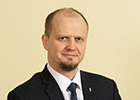
Anti Poolamets
Profiling Eesti Konservatiivse Rahvaerakonna fraktsioonAI Summary
Anti Poolamets places the Supreme Court candidate in a difficult situation, demanding an answer on how the candidate intends to act amidst false and absurd laws, such as the Istanbul Convention’s concept of social genders, and whether the candidate is prepared to resign in defense of their conscience if forced to protect the rights of hundreds of "vulnerable genders."
Aseesimees Toomas Kivimägi
AI Summary
At the end of his address, Deputy Chairman Toomas Kivimägi briefly expressed his thanks.
Anti Poolamets
Profiling Eesti Konservatiivse Rahvaerakonna fraktsioonAI Summary
Anti Poolamets addressed the audience with a direct question, seeking to find out what specific steps they would take regarding the topic under discussion.
Riigikohtu liikme kandidaat Martin Triipan
AI Summary
Supreme Court justice candidate Martin Triipan explains that although the international convention ratified by the Riigikogu is binding on Estonia, it is not directly applicable. Therefore, the responsibility for domestic implementation, shaping legal acts, and interpreting the provisions rests primarily with the legislature, which thereby defines the associated value framework in Estonia.
Aseesimees Toomas Kivimägi
AI Summary
Deputy Speaker Toomas Kivimägi called Kalle Grünthal to the podium.

Kalle Grünthal
Profiling Fraktsiooni mittekuuluvad Riigikogu liikmedAI Summary
Kalle Grünthal presented the candidate for Supreme Court Justice with a dilemma between the European Union's political advertising regulation and the freedom of assembly guaranteed by the Estonian Constitution, asking for clarification on how a citizen should proceed in a situation where these two obligations conflict, and which of the two—the EU regulation or the constitutional order—should take precedence in terms of loyalty and compliance.
Riigikohtu liikme kandidaat Martin Triipan
AI Summary
Martin Triipan, a candidate for the Supreme Court, emphasizes that although European Union law applies within the Estonian legal order, the domestic implementation of EU regulations by supervisory bodies is not always unambiguously defined. Instead, it must always take into account the provisions of the Constitution and the principle of proportionality, in addition to the text of the regulation itself, meaning the final regulatory framework depends on the broader legal order.
Aseesimees Toomas Kivimägi
AI Summary
Arvo Aller was invited to the rostrum by Deputy Chairman Toomas Kivimägi to begin his address.

Arvo Aller
Profiling Fraktsiooni mittekuuluvad Riigikogu liikmedAI Summary
Arvo Aller commended the Supreme Court candidate’s impressive preliminary work, especially regarding the lease and servitude agreements associated with the establishment of wind farms, and inquired whether the candidate had primarily represented the park developers or the local communities in their professional capacity.
Riigikohtu liikme kandidaat Martin Triipan
AI Summary
Supreme Court Justice candidate Martin Triipan explained that although a lawyer's duty of confidentiality imposes certain limitations, he has been involved in projects concerning both operational and developing wind farms. He emphasized that due to increasing restrictions in the forestry sector, landowners are seeking new ways to monetize and utilize their properties, while leaving the final approval of these development plans up to the local community.
Aseesimees Toomas Kivimägi
AI Summary
Deputy Chairman Toomas Kivimägi called Annely Akkermann to the podium, but her actual address is missing from the submitted text, making it impossible to summarize the content.

Annely Akkermann
Profiling Eesti Reformierakonna fraktsioonAI Summary
Annely Akkermann thanked the presenter for the substantive presentation and asked whether the court reform currently being debated in the Riigikogu, if it were to become law, would help bring the judicial system into better alignment with the values of thoroughness, speed, and cooperation emphasized by the presenter.
Riigikohtu liikme kandidaat Martin Triipan
AI Summary
Supreme Court Justice nominee Martin Triipan, who comes from the private sector and lacks detailed internal knowledge of court operations, supports the direction of judicial reform, particularly concerning the specialization of judges and the efficiency of their work. However, he stresses that the Riigikogu, when considering the court management model, must find a balance between efficiency and collegiality, taking into account the preference of top legal experts to work in smaller teams.
Aseesimees Toomas Kivimägi
AI Summary
Vice-Chairman Toomas Kivimägi gave the floor to Peeter Ernits, inviting him to the podium.

Peeter Ernits
Profiling Fraktsiooni mittekuuluvad Riigikogu liikmedAI Summary
Peeter Ernits posed a question to his colleague, who is transferring to the Supreme Court, regarding how a judge should be punished. The judge in question had released the long-term recidivist responsible for the Nõo tragedy, arguing that the individual's previous serious crimes were insignificant, which subsequently led to the recidivist killing an innocent, random person.
Aseesimees Toomas Kivimägi
AI Summary
Deputy Chairman Toomas Kivimägi confined himself to a brief thank you, offering heartfelt gratitude as the only substance of his remarks.
Peeter Ernits
Profiling Fraktsiooni mittekuuluvad Riigikogu liikmedAI Summary
Peeter Ernits focused on the conceptualization of judicial responsibility, analyzing its scope and essence within the legal system.
Aseesimees Toomas Kivimägi
AI Summary
Deputy Chairman Toomas Kivimägi concluded his brief address by thanking Peeter Ernits.
Riigikohtu liikme kandidaat Martin Triipan
AI Summary
Supreme Court candidate Martin Triipan, citing the judicial code of ethics, refuses to comment on a colleague's ruling because he lacks full information regarding the context of the decision, but emphasizes that the case serves as a clear lesson for authorities to improve information exchange so that informed and conscious decisions are always made concerning dangerous individuals.
Aseesimees Toomas Kivimägi
AI Summary
Deputy Speaker Toomas Kivimägi yielded the floor to Madis Kallas, inviting him to the rostrum.

Madis Kallas
Profiling Fraktsiooni mittekuuluvad Riigikogu liikmedAI Summary
Madis Kallas poses a question to the Supreme Court Justice nominee regarding the challenging of election results—a topic that has long preoccupied Estonia—specifically highlighting the protracted nature of the proceedings. He then asks the candidate, given their private sector background, to suggest practical ideas on how the Supreme Court could increase the speed and efficiency of resolving such complex appeals.
Riigikohtu liikme kandidaat Martin Triipan
AI Summary
Candidate for Supreme Court Justice Martin Triipan stresses the necessity for the Supreme Court to focus the attention of the parties in proceedings more on the fundamental issues of the case than previously, thus preventing the proceedings from being weighed down by irrelevant topics. Furthermore, he deems it sensible to consider that, concerning election complaints, not all petitions must necessarily be resolved before the election results are announced; some could be left for resolution even after that.
Aseesimees Toomas Kivimägi
AI Summary
Deputy Chairman Toomas Kivimägi invited Helle-Moonika Helme to speak, but since the content of the speech is missing, it is not possible to provide a substantive summary.

Helle-Moonika Helme
Profiling Eesti Konservatiivse Rahvaerakonna fraktsioonAI Summary
Helle-Moonika Helme expresses deep concern regarding the judicial system, particularly the decisions handed down by the Supreme Court, which she believes undermine the public's sense of justice and perceptually lend cover to political directives, thereby damaging the credibility of the rule of law. She then asks directly whether the speaker intends to recuse himself from the deliberation of the Nursipalu case, given his previous history of representing the state against the local residents.
Riigikohtu liikme kandidaat Martin Triipan
AI Summary
Supreme Court Justice nominee Martin Triipan confirmed that although the likelihood is small due to the differences between the Supreme Court's chambers, he will recuse himself in accordance with the requirements of the law in every situation where a conflict of interest arises or where he has been a party to the proceedings, emphasizing that a judge must step aside from resolving the matter in such a case.
Aseesimees Toomas Kivimägi
AI Summary
Deputy Chairman Toomas Kivimägi, who was apparently presiding over the session, then gave the floor to Andres Metsoja as the next speaker.

Andres Metsoja
Profiling Isamaa fraktsioonAI Summary
Andres Metsoja highlights the inevitable conflict between environmental and economic policy, which results in legal dilemmas. He illustrates this using the example of Soomaa, where a balance must be struck between the protection of wolves and economic activity (grazing), even though the principle dictates that environmental concerns should always outweigh economic activity.
Riigikohtu liikme kandidaat Martin Triipan
AI Summary
Supreme Court candidate Martin Triipan argues that the inevitable collision between environmental and economic issues—influenced by both domestic and EU legislation—is often insufficiently debated in the Riigikogu (Parliament). Consequently, this leaves society uncertain, forcing courts to resolve politically unresolved problems through legal interpretation. It would be much clearer if socially significant issues were settled at the level of the legislature, providing the courts with clear guidance on which principles to follow.
Aseesimees Toomas Kivimägi
AI Summary
Deputy Speaker Toomas Kivimägi invited Mart Helme to the podium to begin his presentation or address.

Mart Helme
Profiling Eesti Konservatiivse Rahvaerakonna fraktsioonAI Summary
Mart Helme accuses the respondents of legalistic maneuvering and evading responsibility, stressing that Estonia joined the European Union on the condition that EU rules must comply with the fundamental principles of the Constitution. He demands a concrete answer as to whether freedom of speech and assembly remains a fundamental constitutional principle or has been revoked by European Union regulations.
Riigikohtu liikme kandidaat Martin Triipan
AI Summary
Supreme Court justice nominee Martin Triipan acknowledged that while freedom of speech is a constitutional principle, restrictions stipulated by law are possible. However, he raised concerns about a potential conflict between European Union law and Estonian legislation, emphasizing that the Committee on European Union Affairs and the negotiating diplomats play a critical role in protecting the constitution—a role whose work has received far too little attention until now.
Aseesimees Toomas Kivimägi
AI Summary
Deputy Chairman Toomas Kivimägi, Henn Põlluaas was called to the podium to deliver his statement, but the content of his presentation is not reflected in the given text.
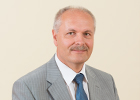
Henn Põlluaas
Profiling Fraktsiooni mittekuuluvad Riigikogu liikmedAI Summary
Henn Põlluaas poses a question to the candidate regarding whether the existing right in Estonia to appeal to court in the event of an infringement of personal interests should be expanded, thereby allowing people to file a claim even when they perceive a violation of public interests.
Riigikohtu liikme kandidaat Martin Triipan
AI Summary
Supreme Court justice nominee Martin Triipan emphasizes that due to the heavy workload of the courts, it is not practical to expand their jurisdiction to allow for public interest litigation, arguing that courts should focus on protecting individual rights, while the broader protection of public interests is the responsibility of other state bodies, although exceptions (e.g., in environmental cases) are justified.
Aseesimees Toomas Kivimägi
AI Summary
Deputy Speaker Toomas Kivimägi called Kalle Laanet to the rostrum to begin his address.

Kalle Laanet
Profiling Eesti Reformierakonna fraktsioonAI Summary
Kalle Laanet asks the candidate for Supreme Court Justice, who possesses diverse legal experience, to assess whether the current procedural codes—such as the Code of Criminal Procedure adopted in 2004—still meet society's expectations following major societal changes, and whether their rapid amendment is necessary to ensure the effectiveness of the administration of justice.
Riigikohtu liikme kandidaat Martin Triipan
AI Summary
Martin Triipan, the candidate for Supreme Court Justice, emphasizes the necessity of continually reviewing and amending current regulations, arguing that they frequently result in unreasonable outcomes. He specifically highlights criminal proceedings, which he finds excessively protracted and expensive, and calls for increased efficiency in these procedures while simultaneously ensuring the rights of individuals are protected.
Aseesimees Toomas Kivimägi
AI Summary
Jüri Jaanson was called to the podium by Vice-Chairman Toomas Kivimägi, but the text he presented consisted only of an introduction, meaning a substantive summary cannot be provided.
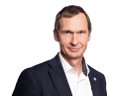
Jüri Jaanson
Profiling Eesti Reformierakonna fraktsioonAI Summary
Jüri Jaanson thanked the Supreme Court candidate and then presented a sector-specific question concerning the establishment of sports arbitration, inquiring whether the constitution permits the principle of finality for a sports court decision, considering every person's right to appeal to a general court for the protection of their rights.
Riigikohtu liikme kandidaat Martin Triipan
AI Summary
Candidate for Supreme Court Justice Martin Triipan concedes that he is not fully versed in the topic of sports law in detail, but confirms that contractual arbitration courts are generally permitted and customary within the Estonian legal system, while simultaneously emphasizing that their suitability in situations where the parties (such as a parent and a club) are unequal is questionable.
Aseesimees Toomas Kivimägi
AI Summary
Deputy Chairman Toomas Kivimägi gave the floor to Rain Epler, inviting him to begin his presentation.
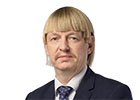
Rain Epler
Profiling Fraktsiooni mittekuuluvad Riigikogu liikmedAI Summary
Rain Epler stresses that because a judge's personal opinion affects decisions in situations where the law is not clear-cut, he requests the candidate for the Supreme Court membership to state their personal view on two specific political issues: the expansion of the European Commission's central authority and energy and industrial policy founded on the zero-emission ideology.
Aseesimees Toomas Kivimägi
AI Summary
Deputy Chairman Toomas Kivimägi briefly expressed his thanks.
Rain Epler
Profiling Fraktsiooni mittekuuluvad Riigikogu liikmedAI Summary
Rain Epler raises a critical question concerning the viability and direction of energy and industrial policy driven by the zero-emission ideology.
Riigikohtu liikme kandidaat Martin Triipan
AI Summary
Candidate for Supreme Court Justice Martin Triipan emphasizes the necessity of striking a balance between rapid European Union integration and domestic interests, demanding that EU initiatives (such as the green transition) be addressed thoroughly and substantively, taking into account people's lives and the economy. Furthermore, he argues that, if necessary, the public should be consulted to gain an additional mandate to decide on the justification of further integration.
Aseesimees Toomas Kivimägi
AI Summary
Deputy Speaker Toomas Kivimägi and Madis Timpson were called to the rostrum to present their report.

Madis Timpson
Profiling Fraktsiooni mittekuuluvad Riigikogu liikmedAI Summary
Madis Timpson expresses satisfaction regarding the successful lawyer's desire to assume the position of a Supreme Court Justice, noting the accompanying financial loss, and asks the candidate for their vision of the Supreme Court's role: should it be merely a strict interpreter of the law or also a developer of jurisprudence.
Riigikohtu liikme kandidaat Martin Triipan
AI Summary
Supreme Court nominee Martin Triipan addresses the crucial role of the Supreme Court in interpreting legislation and developing jurisprudence, which brings clarity to case law. However, he simultaneously stresses the necessity of cooperation between the legislature and the courts, pointing out that if the Parliament (Riigikogu) is dissatisfied with the trajectory of the case law, they always have the option to amend the law, a change which the court must subsequently respect.
Aseesimees Toomas Kivimägi
AI Summary
Deputy Speaker Toomas Kivimägi and Evelin Poolamets were called to the rostrum to deliver their presentation.

Evelin Poolamets
Profiling Fraktsiooni mittekuuluvad Riigikogu liikmedAI Summary
Evelin Poolamets raises a critical question regarding the protection of Estonia's legal framework and values in situations where Estonian citizens utilize foreign laws—such as the surrogacy service, which is prohibited in Estonia, in the United States—to bypass domestic legislation. She asks whether the state should accept this practice or prioritize the fundamental principles of Estonian law.
Riigikohtu liikme kandidaat Martin Triipan
AI Summary
Supreme Court nominee Martin Triipan argues that while a globalized world requires the acceptance of diverse national value systems, he stresses that Estonia retains the right to establish its own laws and order without being bound by the rules of other countries, characterizing the issue as fundamentally a political matter rooted in value judgments.
Aseesimees Toomas Kivimägi
AI Summary
Deputy Speaker Toomas Kivimägi gave the floor to Rene Koka.
AI Summary
Rene Kokk poses a question to the candidate for Supreme Court Justice regarding the divergence between court rulings and public expectations when imposing sentences, particularly in cases involving serious crimes. He refers to the concern that society’s expectation of justice does not align with the actual decisions, which often allow offenders to be released prematurely and commit new crimes, and asks what the reason for this discrepancy is and what measures should be taken.
Riigikohtu liikme kandidaat Martin Triipan
AI Summary
Supreme Court justice nominee Martin Triipan, while acknowledging that criminal law falls outside his civil law area of expertise, explained the divergence between court rulings and public expectations by stating that the court bases its decision solely on the information presented to it, which differs from the public's knowledge, and emphasized that the possibility of changing criminal policy ultimately rests with the Riigikogu.
Aseesimees Toomas Kivimägi
AI Summary
Vice-Chairman Toomas Kivimägi gave the floor to Helir-Valdor Seeder.

Helir-Valdor Seeder
Profiling Isamaa fraktsioonAI Summary
Helir-Valdor Seeder is requesting that the Supreme Court candidate, who had previously been overly diplomatic on the topic of judicial reform, state their concrete position regarding the merging of courts. He stressed that this issue is controversial among judges and directly affects both the independence of the judiciary and the availability of court services.
Riigikohtu liikme kandidaat Martin Triipan
AI Summary
Supreme Court candidate Martin Triipan endorses the direction of merging courts, seeing potential for more professional and clearer organizational management, although he doubts the promised massive economic savings will materialize. At the same time, he stresses the urgent necessity of incorporating elements of collegiality into the management structure (such as steering committees or heads of procedural groups) to prevent the undue dominance of a single top executive and ensure efficiency in large courthouses, given the specific nature of the judicial system.
Aseesimees Toomas Kivimägi
AI Summary
Deputy Speaker Toomas Kivimägi gave the floor to Ando Kiviberg.

Ando Kiviberg
Profiling Fraktsiooni mittekuuluvad Riigikogu liikmedAI Summary
Ando Kiviberg thanks the candidate for Supreme Court Justice for a substantive presentation, criticizes the ideological questions coming from the right side of the chamber, emphasizing that judgment must be administered primarily based on the law, and inquires whether all Riigikogu factions have had the opportunity to meet with the candidate and ask questions.
Riigikohtu liikme kandidaat Martin Triipan
AI Summary
Martin Triipan, a candidate for the Supreme Court, explained that all parliamentary groups were offered the opportunity to meet with him, but not all chose to take advantage of it.
Aseesimees Toomas Kivimägi
AI Summary
Deputy Speaker Toomas Kivimägi's remarks consist solely of inviting Hanah Lahe to the stage, meaning the submitted material contains no substance that can be summarized.

Hanah Lahe
Profiling Fraktsiooni mittekuuluvad Riigikogu liikmedAI Summary
Hanah Lahe, a member of the Environment Committee, acknowledges Martin Triipan’s long-standing experience in environmental and planning law and asks him to assess the strengths, areas for improvement, and upcoming challenges facing Estonian environmental law.
Riigikohtu liikme kandidaat Martin Triipan
AI Summary
Candidate for Supreme Court Justice Martin Triipan focuses on the primary challenge facing the environmental sector: how to achieve carbon neutrality goals and reduce environmental impact through robust decisions, while simultaneously ensuring acceptance from society and businesses. He advocates for market-based solutions over strict regulation and emphasizes the necessity of discussing in the Riigikogu the easing of overly restrictive nature conservation measures to reduce the administrative burden.
Aseesimees Toomas Kivimägi
AI Summary
Deputy Chairman Toomas Kivimägi and Urve Tiidus were called to the rostrum to deliver their report.

Urve Tiidus
Profiling Eesti Reformierakonna fraktsioonAI Summary
Urve Tiidus posed a philosophical question to the Supreme Court candidate, asking him/her to explain which personal qualities are indispensable for a judge, given that this role involves determining the fate of individuals.
Riigikohtu liikme kandidaat Martin Triipan
AI Summary
Supreme Court nominee Martin Triipan emphasized that a dispenser of justice should be characterized by internal neutrality, impartiality, the hearing of both parties, and unwavering calmness and thoroughness.
Aseesimees Toomas Kivimägi
AI Summary
Deputy Chairman Toomas Kivimägi gave the floor to Helmen Kütt, asking her to come to the podium.

Helmen Kütt
Profiling Sotsiaaldemokraatliku Erakonna fraktsioonAI Summary
Helmen Kütt wished the Supreme Court justice nominee success and requested that they provide their personal assessment on whether the accessibility and affordability of the court system are adequate for the people of Estonia, noting concerns regarding the lack of legal aid and the slow pace of proceedings.
Riigikohtu liikme kandidaat Martin Triipan
AI Summary
Martin Triipan, a candidate for Supreme Court Justice, speaking both as a lawyer and a member of the Estonian Bar Association board, acknowledges that there are serious problems with the accessibility of state legal aid. These issues stem both from insufficient funding and from plans to replace primary legal assistance with still uncertain digital solutions. He emphasizes that without adequate resources, justice and social measures will not reach those in need who would otherwise be unable to access the courts.
Aseesimees Toomas Kivimägi
AI Summary
Deputy Chairman Toomas Kivimägi thanked [the participants] for the substantive answers, closed the debate as there were no further requests [to speak], and announced that since no amendments could be submitted, draft resolution 744, submitted by the Chief Justice of the Supreme Court regarding the appointment of Martin Triipan as a member of the Supreme Court, would immediately be put to a secret final vote, drawing attention to the confidentiality of the vote.
Aseesimees Toomas Kivimägi
AI Summary
Deputy Speaker Toomas Kivimägi first announced the adoption of draft resolution 744, then informed the members of the Riigikogu of the Reform Party faction's proposal to extend the sitting until 2 p.m., but since technical problems arose during the preparation of the vote, he called a five-minute recess.
Aseesimees Toomas Kivimägi
AI Summary
Vice-Chairman Toomas Kivimägi explained that due to the technical specifics of the system, it is not possible to conduct any vote until new agenda item No. 2 has been opened, after which a roll call can be organized, and subsequently, a vote can be held on extending the session.
Rain Epler
Profiling Fraktsiooni mittekuuluvad Riigikogu liikmedAI Summary
Rain Epler is requesting clarification regarding a technical peculiarity (whether it is a bug or an added feature), inquiring whether it arose in connection with the new controllers/remotes or if it was already present in the system from an earlier time.
Aseesimees Toomas Kivimägi
AI Summary
Deputy Speaker Toomas Kivimägi notes that, to his recollection, a similar situation has never occurred before.