2025 Report by the Minister of Economic Affairs and Industry on the implementation of the state's long-term development strategy "Estonia 2035"
Session: XV Riigikogu, VI Session, Plenary Sitting
Date: 2025-11-06 12:10
Participating Politicians:

Total Speeches: 127
Membership: 15
Agenda Duration: 2h 45m
AI Summaries: 127/127 Speeches (100.0%)
Analysis: Structured Analysis
Politicians Speaking Time
Politicians
Analysis
Summary
The agenda item was the presentation by Erkki Keldo, the Minister of Economic Affairs and Industry, regarding the implementation of the national long-term development strategy, "Eesti 2035," during 2025. Minister Keldo provided an optimistic overview of the Estonian economic recovery, highlighting improved confidence and growth in exports. The strategy centers on ensuring security (allocating at least 5% of GDP to defense spending), reducing bureaucracy (with the goal of moving toward a real-time economy, saving entrepreneurs 132 million euros over five years), and promoting investments, including the creation of a 100 million euro support measure for major investments.
The ensuing discussion addressed several important topics, such as regional policy (directing business subsidies outside major growth centers), solving the problem of youth unemployment through educational reform and more flexible labor laws, and increasing investments in research and development (R&D). The energy sector generated criticism and questions, particularly concerning the speed of renewable energy development and the opposition of local communities to planning proposals. Also debated was the impact of abolishing the tax notch and cancelling the planned income tax hike on domestic consumption and the middle class. During faction negotiations, representatives debated the Minister’s optimism and the competitiveness of green energy, citing both the causes of the economic downturn and risks related to national defense.
Decisions Made 2
At the proposal of the Reform Party faction, the Riigikogu extended the sitting until the agenda was exhausted, but no later than 14:00. Twenty-two members of the Riigikogu voted in favor of the proposal.
No substantive decisions were adopted regarding the report on the implementation of the "Estonia 2035" Strategy.
Aseesimees Arvo Aller
AI Summary
Vice-Chairman Arvo Aller introduced the first item on today's Riigikogu agenda—a report by the Minister of Economic Affairs and Industry, Erkki Keldo, on the implementation of the state's long-term development strategy "Eesti 2035." He also clarified the procedure for the debate, which stipulates a 30-minute presentation by the Minister, a limited question-and-answer session, and that no decision will be adopted upon the conclusion of the discussion.
Majandus- ja tööstusminister Erkki Keldo
AI Summary
Minister of Economic Affairs and Industry Erkki Keldo provided an overview of the Estonian economy's recovery and its optimistic outlook, underscoring that the state's primary role is to create a competitive and entrepreneur-friendly environment, founded upon strong security. To accelerate economic growth, the government is focusing on drastically reducing bureaucracy (including the transition to a real-time economy), increasing investments in research and development, simplifying planning processes, and supporting exports in key sectors, while simultaneously calling on society to avoid pessimism and to support overcoming the "not-in-my-backyard" mentality, which hinders development.
Aseesimees Arvo Aller
AI Summary
Vice-Chairman Arvo Aller gave the floor to Urmas Kruuse, noting that questions had been posed to the previous speaker.

Urmas Kruuse
Profiling Eesti Reformierakonna fraktsioonAI Summary
Urmas Kruuse acknowledged in the minister’s report the importance of reducing bureaucracy and funding science and innovation, but focused on the question of whether the government is prepared to increase in the future the proportion of business support grants directed outside the growth centers of Tallinn and Tartu, in order to ensure regional balance and compensate for the weaker economic pull of smaller regions.
Majandus- ja tööstusminister Erkki Keldo
AI Summary
Minister of Economic Affairs and Industry Erkki Keldo confirmed the agreed-upon direction for 40% regional funding. However, he stressed that future steps must strike a balance between Estonia's long-term regional development (ensuring life is possible everywhere) and economic rationality, given that Tallinn and Harju County are the drivers of GDP. He also emphasized the importance of cooperation among local governments so that limited resources can be utilized as effectively as possible for the benefit of local residents and businesses.
Aseesimees Arvo Aller
AI Summary
Vice-Chairman Arvo Aller gave the floor to Madis Timpson, inviting him to the podium to deliver his presentation.
Madis Timpson
Profiling Fraktsiooni mittekuuluvad Riigikogu liikmedAI Summary
Madis Timpson thanked the minister for the thorough presentation, while simultaneously providing an update on the progress of the new Employment Contracts Act proceedings. In the context of improving competitiveness, he then asked what the government’s specific measurable goals and planned measures are for increasing flexibility and improving youth employment by 2035.
Majandus- ja tööstusminister Erkki Keldo
AI Summary
Minister of Economic Affairs and Industry Erkki Keldo expressed satisfaction with the progress of the flexible labor contract legislation, but primarily focused on the concern surrounding youth unemployment, whose root causes date back to the COVID era. Long-term solutions include education reform, simplifying the acquisition of initial work experience (for instance, by increasing funding for student work brigades), and the Unemployment Insurance Fund's strategic focus on identifying, retraining, and guiding NEET youth into employment, thereby ensuring young people possess better qualifications and competitiveness in the labor market.
Aseesimees Arvo Aller
AI Summary
Deputy Speaker Arvo Aller gave the floor to Reili Rand.

Reili Rand
Profiling Sotsiaaldemokraatliku Erakonna fraktsioonAI Summary
While Reili Rand acknowledges the steps taken to reduce the gender pay gap, she highlights issues within the energy and planning sectors, stressing that sustainable green energy is a prerequisite for competitiveness. She criticizes the slow pace of developments and the cancellation of specific spatial plans, and asks the minister what concrete steps the state intends to take to improve the planning process and assume more decisive responsibility for accelerating sustainable projects.
Aseesimees Arvo Aller
AI Summary
Vice-Chairman Arvo Aller used a brief phrase to signal that it was the next speaker’s turn to begin their presentation.
Reili Rand
Profiling Sotsiaaldemokraatliku Erakonna fraktsioonAI Summary
Reili Rand raises the question of empowering or mandating local governments (LG/municipalities) so that they are both able and required to address a specific issue.
Majandus- ja tööstusminister Erkki Keldo
AI Summary
Minister of Economic Affairs and Industry Erkki Keldo believes that stable regional development and economic growth require respectful, evidence-based debate, not fearmongering. He stresses that planning is fundamentally an issue of local government autonomy, with the central government's role being primarily advisory and focused on establishing a balanced framework via the national spatial plan (2050) to mitigate local conflicts between residential areas and industrial zones.
Aseesimees Arvo Aller
AI Summary
Deputy Chairman Arvo Aller and Jaak Aab were called to the podium to deliver their presentation.
AI Summary
Jaak Aab praises the renewable energy support measures that have helped lower electricity prices, pointing to the example of Great Britain, where the costs of green subsidies paid off handsomely. However, he is seriously concerned that Estonia still lacks one-third of its electricity generation capacity, and that development is being hampered by constant political opposition, even within the ruling coalition itself.
Majandus- ja tööstusminister Erkki Keldo
AI Summary
Minister of Economic Affairs and Industry Erkki Keldo emphasizes that instead of political opposition, common ground should be found and solutions that improve society should be supported. He confirms that he is fully aware of the energy sector development plan, which sets the strategic goal of achieving a competitive final energy price for all consumer classes. He praises the new Energy Minister's systematic and rational approach, which involves supporting the rapid growth of renewable energy, ensuring dispatchable capacity and storage, and providing state guarantees for major projects, all aimed at increasing the competitiveness of Estonian companies while keeping taxpayer risk minimal.
Aseesimees Arvo Aller
AI Summary
Deputy Chairman Arvo Aller and Urve Tiidus were called to the speaker’s stand, which was also the entirety of the text that had been presented.

Urve Tiidus
Profiling Eesti Reformierakonna fraktsioonAI Summary
Urve Tiidus, referencing the Foresight Centre's report, raised the issue of Estonia's productivity deficit compared to Finland. She then asked the minister whether achieving better outcomes required prioritizing the broader adoption of artificial intelligence or addressing the education and employment challenges faced by young people who are not in education, employment, or training (NEETs).
Majandus- ja tööstusminister Erkki Keldo
AI Summary
Minister of Economic Affairs and Industry Erkki Keldo confirmed that there is no single simple solution for boosting the economy’s productivity and added value. Instead, success is guaranteed by a long-term matrix that encompasses continued research and development, employee retraining, development of the education system, and close export-oriented cooperation. He cited Finland and its potential gigafactory project, which Estonia should join, as an example.
Aseesimees Arvo Aller
AI Summary
Deputy Chairman Arvo Aller and Diana Ingerainen were invited to speak.
Diana Ingerainen
Profiling Fraktsiooni mittekuuluvad Riigikogu liikmedAI Summary
Diana Ingerainen stresses the importance of strategic planning and prioritization. At the same time, she criticizes the budget process for having too many activities and large amounts of carry-over resources, and she raises the question of how to design planning processes in a way that encourages ministries to review their priorities and conduct strategic risk assessment.
Majandus- ja tööstusminister Erkki Keldo
AI Summary
Minister of Economic Affairs and Industry Erkki Keldo emphasized the necessity of improving state budget planning, particularly concerning research and development funding, where the long disbursement cycle often results in large carry-over balances. These balances are frequently misunderstood by political opponents, despite the fact that they are actually covered by existing obligations. Consequently, the Ministry of Economic Affairs has been forced to cut operating and administrative costs for the third consecutive year, establish clear priorities, and implement reforms (such as reducing the staff of the Land and Spatial Planning Board by 19%) in order to make services more efficient, reduce duplication, and thus adapt to a more challenging economic environment.
Aseesimees Arvo Aller
AI Summary
Deputy Speaker Arvo Aller gave the floor to Annely Akkermann, inviting her to the podium.
Annely Akkermann
Profiling Eesti Reformierakonna fraktsioonAI Summary
Annely Akkermann commends the presentation regarding the reduction of bureaucracy and the automation of systems, but draws attention to the problem that over half of Estonia's 260,000 private limited companies do not submit data to the state. She asks directly whether the necessary data exchange is planned to be achieved using the stick, the carrot, or both methods.
Majandus- ja tööstusminister Erkki Keldo
AI Summary
Minister of Economic Affairs and Industry Erkki Keldo explains that achieving an effective digital business environment requires both state standardization (making data machine-readable) and businesses becoming 100% digital, including the transition to e-invoicing. He emphasizes that this collaboration will result in enormous time savings, as data will no longer need to be submitted repeatedly, and the state is also offering support measures to facilitate this.
Aseesimees Arvo Aller
AI Summary
Vice-Chairman Arvo Aller gave the floor to Anti Allas, requesting him to begin his address.

Anti Allas
Profiling Fraktsiooni mittekuuluvad Riigikogu liikmedAI Summary
Anti Allas acknowledged the optimism of the presentation but drew attention to the growing regional disparities in satisfaction with the living environment, which are caused by the lack of income and well-paying jobs in peripheral areas. He then specifically asked what the plans are for providing fast internet access to entrepreneurs in Southeast Estonia, who require it for global operations, requesting that the response avoid stating that the matter falls under the jurisdiction of the Minister of Digital Affairs.
Majandus- ja tööstusminister Erkki Keldo
AI Summary
Minister of Economic Affairs and Industry Erkki Keldo clarified that while the communications sector falls under the responsibility of another minister, collaboration with telecommunications companies is absolutely vital. He stressed that the future of connectivity is no longer reliant on cables, but on 5G and the developing 6G, which aims to ensure ultra-fast and low-latency data transmission, particularly for industrial companies. Offering a concrete solution is complicated due to the high cost, which is why the focus must be on working together with telecom providers to ensure new-generation coverage across the whole of Estonia.
Aseesimees Arvo Aller
AI Summary
Deputy Chairman Arvo Aller yielded the floor to Raimond Kaljulaid, calling him to the podium to begin his report.

Raimond Kaljulaid
Profiling Sotsiaaldemokraatliku Erakonna fraktsioonAI Summary
Raimond Kaljulaid acknowledges the minister’s report but raises concerns regarding the investment tempo of the 100 million euro defense fund managed by SmartCap. He asks directly whether, given the fund’s single investment to date and its long-term investment horizon, it is realistic to expect the Estonian Defence Forces to derive any tangible benefit from this fund in the coming years, especially in light of the current security crisis.
Majandus- ja tööstusminister Erkki Keldo
AI Summary
Minister of Economic Affairs and Industry Erkki Keldo explained that while he shares the concern regarding the speed of investments, and this is particularly crucial in the defense industry, the responsible and risk-mitigated placement of taxpayer money (100 million euros) through SmartCap takes 6–10 months in order to avoid past failures. He confirmed that ongoing communication is being maintained with hundreds of companies, and the first real direct investment decisions should be made in the near future, at the latest by the start of the new year, which will also require SmartCap to expand its team.
Aseesimees Arvo Aller
AI Summary
Deputy Chairman Arvo Aller gave the floor to Peeter Ernits, inviting him to deliver a presentation.

Peeter Ernits
Profiling Fraktsiooni mittekuuluvad Riigikogu liikmedAI Summary
Peeter Ernits acknowledges the presenter's enthusiasm, but sharply criticizes the promise of the state being in "firm hands," made by her party leader Kristen Michal. He points to the economic crisis, inflation, youth unemployment, and total distrust, and asks whether it isn't time to take the reins of government away from the leader with trembling hands and hand them over to strong and bright eyes, in order to pull the country out of the current mire.
Majandus- ja tööstusminister Erkki Keldo
AI Summary
Minister of Economic Affairs and Industry Erkki Keldo acknowledges existing concerns, such as youth unemployment, but stresses that Estonia’s employment figures are among the highest in Europe, and registered unemployment is at its lowest level in the past five years. He affirms that the government is working hard alongside entrepreneurs to create a more competitive environment, implementing reforms that have been postponed for years, such as the modernization of vocational education. He also criticizes previous economic ministers for their inaction. Finally, the speaker urges Estonians to stop focusing constantly on negativity in order to boost national self-confidence, embrace a winner’s mentality, and recognize existing success stories.
Aseesimees Arvo Aller
AI Summary
Deputy Chairman Arvo Aller and Irja Lutsar were invited to the speaker's stand to begin their presentations.
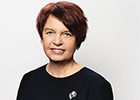
Irja Lutsar
Profiling Eesti 200 fraktsioonAI Summary
Irja Lutsar thanked the speaker for the optimistic presentation, but stressed that Europe is not a global innovation leader, but rather lags behind the US and China, leading her to ask whether Europe intends to simply remain in its internal "sandbox" or if there is a strategy in place to catch up with the global leaders and become a true innovation flagship.
Majandus- ja tööstusminister Erkki Keldo
AI Summary
Minister of Economic Affairs and Industry Erkki Keldo acknowledges that while Europe leads the way in supercomputing and smart industry, the technology sector lags behind the US primarily due to excessive regulation and a lack of a systematic approach to improving competitiveness. He emphasized that European economy ministers are demanding faster and more tangible action to retain talent here and set the ambition of bringing European companies back into the Top 10 of the world’s most valuable firms, noting that progress is currently hampered by a lack of common understanding and bureaucracy hidden in the details.
Aseesimees Arvo Aller
AI Summary
Following a brief introduction, Vice-Chair Arvo Aller gave the floor to Margit Sutrop.

Margit Sutrop
Profiling Eesti Reformierakonna fraktsioonAI Summary
Margit Sutrop thanks the minister for the positive presentation and the success stories in research and development, but draws attention to Estonia's persistently low productivity. She asks what the ministry's concrete plans are for increasing productivity in order to achieve the set welfare goals, and how they plan to improve competitiveness, given the close dependence on target countries such as Finland.
Majandus- ja tööstusminister Erkki Keldo
AI Summary
Minister of Economic Affairs and Industry Erkki Keldo emphasizes that although the Estonian timber industry is exceptionally well automated by international standards, increasing productivity requires investment in the digitalization and automation of smaller companies, raising the value of products through research and development, and systematically diversifying export markets by focusing on Germany and other large markets to avoid excessive dependence on recovering neighbors.
Aseesimees Arvo Aller
AI Summary
Deputy Chairman Arvo Aller and Jüri Jaanson were asked to proceed to the speaker's podium.
Jüri Jaanson
Profiling Eesti Reformierakonna fraktsioonAI Summary
Jüri Jaanson thanked the minister for the presentation and drew attention to the need to pay special attention to the 55+ age group in the labor market, alongside young people, emphasizing the importance of retraining and flexible working arrangements. He then asked more specifically about the construction of the multifunctional hall and related development activities.
Aseesimees Arvo Aller
AI Summary
Deputy Chairman Arvo Aller signaled with the laconic phrase, "Your time!" that the next speaker could begin their presentation, thereby handing over the floor.
Majandus- ja tööstusminister Erkki Keldo
AI Summary
Minister of Economic Affairs and Industry Erkki Keldo confirmed that due to the state's complicated financial situation, there are no additional funds available to finance major projects, such as a multifunctional conference center, but the state can assist in promoting business tourism by simplifying bureaucratic procedures and planning regulations. Furthermore, he stressed the importance of flexible employment contracts for the elderly and the necessity of directing older workers into retraining and upskilling programs, particularly in IT skills, to enhance their competitiveness in the job market.
Aseesimees Arvo Aller
AI Summary
Deputy Chairman Arvo Aller Õnne Pillak was called to the rostrum to present his report.

Õnne Pillak
Profiling Eesti Reformierakonna fraktsioonAI Summary
Õnne Pillak commends the optimistic outlook of the report, but wants to know how near-term tax changes—including the elimination of the 'tax hump' that hinders income growth, and the cancellation of the planned increases in income tax and corporate profit taxation—will impact the economy and, consequently, people's well-being.
Majandus- ja tööstusminister Erkki Keldo
AI Summary
Minister of Economic Affairs and Industry Erkki Keldo confirms that Estonia’s tax system is the most competitive in the OECD thanks to the absence of income tax on reinvested profits, and that the reduction of labor taxes and the decrease in the income tax burden for private individuals next year is a crucial boost for economic growth, increasing consumer confidence and domestic demand, which creates a positive snowball effect in the economy.
Aseesimees Arvo Aller
AI Summary
Vice-Chairman Arvo Aller gave the floor to Peeter Tali, asking him to approach the podium.
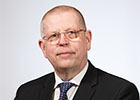
Peeter Tali
Profiling Fraktsiooni mittekuuluvad Riigikogu liikmedAI Summary
Peeter Tali, commending the minister’s presentation, raises the question, in light of the critical report by Auditor General Janar Holm, of whether Estonia’s long-term strategy until 2035 should be fundamentally reassessed due to global changes—such as the war in Ukraine and the consolidation of authoritarian regimes—emphasizing the need to also take Sauli Niinistö’s report into account.
Aseesimees Arvo Aller
AI Summary
Deputy Chairman Arvo Aller gave a brief signal indicating that the next speaker's time had begun.
Peeter Tali
Profiling Fraktsiooni mittekuuluvad Riigikogu liikmedAI Summary
Peeter Tali briefly addressed the country's preparedness to handle both military and civil crises, concluding his presentation with thanks and an apology.
Majandus- ja tööstusminister Erkki Keldo
AI Summary
Minister of Economic Affairs and Industry Erkki Keldo emphasizes that due to the full-scale war in Ukraine, Estonia and other European countries have shifted their focus, setting the very rapid value growth of the defense industry as a societal priority. This growth is the cornerstone of Estonia’s long-term competitiveness, with turnover expected to reach 2 billion by 2030. He adds that while the government is working to reduce bureaucracy and speed up planning processes, in political reality, there are often discrepancies between words and deeds.
Aseesimees Arvo Aller
AI Summary
Deputy Chairman Arvo Aller. Tiit Maran limited himself merely to stating his name, omitting the content of his address.

Tiit Maran
Profiling Fraktsiooni mittekuuluvad Riigikogu liikmedAI Summary
Tiit Maran criticizes the minister, stating that the report concerning economic development completely ignored the aspect of environmental and sustainable resource use, and asks directly whether the minister considers environmental sustainability irrelevant or if he disagrees with his prime minister on the issue of limits imposed by nature.
Majandus- ja tööstusminister Erkki Keldo
AI Summary
Minister of Economic Affairs and Industry Erkki Keldo emphasized that although his area of responsibility is limited to the development guidelines of "Estonia 2035," he considers environmental sustainability and a clean living environment to be crucial for the long-term sustainability of business and the economy. Therefore, we must stop pitting the economy against nature conservation and instead find rational solutions, consistent with technological progress, that package together competitiveness and the quality of the living environment.
Aseesimees Arvo Aller
AI Summary
After a brief introduction, Deputy Chairman Arvo Aller gave the floor to Anti Haugas.
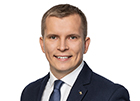
Anti Haugas
Profiling Fraktsiooni mittekuuluvad Riigikogu liikmedAI Summary
Anti Haugas emphasizes the importance of industrial development and automation, and asks the minister what the plans are for simplifying the development of industrial infrastructure so that Estonia can establish new production facilities faster than competing regions and thereby improve its competitiveness.
Majandus- ja tööstusminister Erkki Keldo
AI Summary
Minister of Economic Affairs and Industry Erkki Keldo emphasizes the necessity of accelerating industrial development that supports economic growth by resolving bottlenecks in planning and permitting procedures and ending the conflict between communities and new jobs. To achieve this, the state must prioritize the development of large industrial areas (including defense industry parks), map existing potential sites, and ensure a long-term balance between industrial, residential, and green areas within the framework of the national spatial plan "Eesti 2050," while providing communities with honest and well-reasoned information.
Aseesimees Arvo Aller
AI Summary
Deputy Chairman Arvo Aller granted the floor to Rain Epler, inviting him to the podium to deliver his presentation.
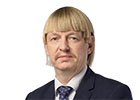
Rain Epler
Profiling Fraktsiooni mittekuuluvad Riigikogu liikmedAI Summary
Rain Epler sharply criticizes the minister's stance on energy, arguing that developing intermittent energy (wind and solar power) does not lead to lower prices. On the contrary, he claims the correlation points to higher prices, citing the deindustrialization of Germany as an example and emphasizing that fossil fuels are the foundation of competitiveness. Furthermore, he refers to a national defense report that deems the development of intermittent energy a serious security risk, and suggests the minister should thoroughly brush up on his knowledge of energy.
Aseesimees Arvo Aller
AI Summary
Vice-Chairman Arvo Aller confined himself to a brief procedural remark, giving the floor to the next speaker and noting that his time had begun.
Majandus- ja tööstusminister Erkki Keldo
AI Summary
Minister of Economic Affairs and Industry Erkki Keldo dismissed a colleague's skepticism, emphasizing that Estonia has rapidly increased its share of renewable energy. He stressed that in the future, it will be green energy—balanced with dispatchable capacity and storage solutions—that guarantees the most competitive price for the consumer. He warned that an outdated mindset would impede the country's development, much like ignoring the IT revolution, and affirmed that future economic competitiveness hinges on the willingness to embrace green transitions.
Aseesimees Arvo Aller
AI Summary
Vice-Chairman Arvo Aller Priit Sibul was called to the rostrum to deliver his presentation.

Priit Sibul
Profiling Isamaa fraktsioonAI Summary
Priit Sibul began with polite addresses and conveyed words of praise to the minister, noting that the Reform Party deputies, in particular, had expressed satisfaction with his enthusiasm and cheerfulness.
Majandus- ja tööstusminister Erkki Keldo
AI Summary
Minister of Economic Affairs and Industry Erkki Keldo posed a brief, rhetorical question, either expressing surprise or implying that the listener shared the same fate or was involved in the same situation.
Priit Sibul
Profiling Isamaa fraktsioonAI Summary
Priit Sibul initially voiced skepticism about the link between the minister's enthusiasm and the actual performance of the Estonian economy, stressing that mere cheerfulness won't boost the economy. He subsequently requested a detailed breakdown of the major investments planned for the near future, noting that three projects are already underway and hoping there is still something else in the pipeline.
Majandus- ja tööstusminister Erkki Keldo
AI Summary
Minister of Economic Affairs and Industry Erkki Keldo stresses that while positivity doesn't directly correlate with economic growth, unconstructive pessimism harms consumer confidence; however, the government's role is to create a business-friendly environment, not to manage the economy. He highlights concrete initiatives undertaken during his term, such as reducing bureaucracy, accelerating planning processes, and launching the large-scale investment measure, under which three high value-added and capital-intensive projects have already received approval, while the state's risk has been minimized.
Aseesimees Arvo Aller
AI Summary
Deputy Chairman Arvo Aller Varro Vooglaid was invited to speak.
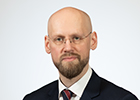
Varro Vooglaid
Profiling Fraktsiooni mittekuuluvad Riigikogu liikmedAI Summary
Varro Vooglaid sharply challenges the notion that one must inevitably go along with changes, deeming the European Union's green transition irrational and futile, and emphasizing that mere positive thinking won't help if objective corrections haven't been made. He asserts that Estonia is living far beyond its means—lacking funds for the green transition, increasing defense capabilities, and the construction of Rail Baltic—and criticizes the report for failing to address the serious demographic crisis that threatens the country's economic prospects.
Majandus- ja tööstusminister Erkki Keldo
AI Summary
The Minister of Economic Affairs and Industry, Erkki Keldo, answered questions in the Riigikogu (Parliament), explaining that his speech had to strictly adhere to the "Estonia 2035" framework, which is why IT, environmental protection, and family policy remained under the responsibility of other ministers. He emphasized that technological development and competitiveness are not in conflict with environmental goals, but rather support them through efficiency. Furthermore, he sharply criticized previous governments (referring to Isamaa and the Centre Party) for spending reserves and creating a structural deficit during good times. He deemed the current concern over the state budget's condition to be absurd and hypocritical, arguing that today's situation is the cumulative result of past financial overspending.
Aseesimees Arvo Aller
AI Summary
Deputy Speaker Arvo Aller acknowledged the minister's refusal to participate in the finance debate and continued the sitting, giving the floor to Aleksandr Tšaplõgin to pose the next question.

Aleksandr Tšaplõgin
Profiling Fraktsiooni mittekuuluvad Riigikogu liikmedAI Summary
Aleksandr Tšaplõgin is requesting the minister to disclose which companies the state intends to support and under what conditions, using the enormous sum planned in the state budget, since the list of aid recipients has so far been concealed from the public.
Majandus- ja tööstusminister Erkki Keldo
AI Summary
Minister of Economic Affairs and Industry Erkki Keldo explained that because there are an extremely large number of support measures for entrepreneurship (such as digitalization, automation, or supporting the defense industry), and these measures may fall under the jurisdiction of various ministries or agencies (for example, the Environmental Investments Centre), it was impossible for him to answer such a broad question. He therefore asked the questioner to specify which measure they were interested in to receive a concrete response.
Aseesimees Arvo Aller
AI Summary
Deputy Chairman Arvo Aller gave the floor to Andres Metsoja, inviting him to the podium to deliver his presentation.
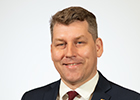
Andres Metsoja
Profiling Isamaa fraktsioonAI Summary
Andres Metsoja stresses that the government's ambition to draft the climate-resilient economy act must be incorporated into the 2035 development plan. He further asks the minister to clarify the specific economic focus areas (such as the food industry or digitalization) that are planned to be strengthened using support measures during the next European Union financial period, specifically to achieve the objective of climate resilience.
Majandus- ja tööstusminister Erkki Keldo
AI Summary
Minister of Economic Affairs and Industry Erkki Keldo clarified that while the Minister of Energy is responsible for the plan concerning a climate-resilient economy, the government is clearly focused on ensuring that environmental protection, technological advancement, and business competitiveness progress simultaneously, thereby steering the Estonian economy toward more knowledge-intensive and higher value-added exports. He emphasized that to accelerate economic growth, the export action plan objectively identifies eight priority sectors—such as IT, the defense industry, and green technology—where increased resources will be directed.
Aseesimees Arvo Aller
AI Summary
Vice-Chair Arvo Aller gave the floor to Yoko Alender, inviting her to the podium to deliver her presentation.

Yoko Alender
Profiling Eesti Reformierakonna fraktsioonAI Summary
Yoko Alender welcomed the minister's positivity and highlighted the obstacles to developing renewable energy in Estonia, asking how the adoption of clean energy sources could be accelerated in a situation where local governments yield to a vocal minority, despite the Riigikogu's decision that renewable energy is of overriding public interest, and whether this argument should be used more forcefully in planning procedures.
Majandus- ja tööstusminister Erkki Keldo
AI Summary
The Minister of Economic Affairs and Industry, Erkki Keldo, expresses regret that the local elections concluded without any substantive programs or discussion of local policy, instead focusing on national issues and scaremongering. He stresses that planning is crucial for municipal autonomy and economic development. Furthermore, he calls for an honest and evidence-based debate on clean energy and job creation to ensure the growth of both the regions’ economies and their living environments, pending clear guidance from the courts regarding the legitimacy of halting planning procedures.
Aseesimees Arvo Aller
AI Summary
Deputy Chairman Arvo Aller gave the floor to Siim Pohlak, calling him by name to speak.

Siim Pohlak
Profiling Eesti Konservatiivse Rahvaerakonna fraktsioonAI Summary
Siim Pohlak criticizes the minister for denying the link between the demographic crisis and the economy. He demands clarification on how much the working-age population is expected to decrease by 2035 and what the specific impact of this reduction will be on the Estonian economy, stressing that this problem genuinely affects the economy.
Majandus- ja tööstusminister Erkki Keldo
AI Summary
The Minister of Economic Affairs and Industry, Erkki Keldo, stressed that while other topics (such as energy and family policy) are extremely important, the format of the presentation strictly limited him to discussing the "Eesti 2035" metrics that fall within his specific remit. This was necessary to adhere to the regulations and avoid encroaching on the domains of other ministers. He went on to explain the dynamics of the working-age population and the need for flexible employment contracts to support young people and active individuals of retirement age. Furthermore, he emphasized the priority of increasing the number of healthy life years, promising to forward the exact requested figure at a later time.
Esimees Lauri Hussar
AI Summary
Chairman Lauri Hussar called Aleksei Jevgrafov to the podium.

Aleksei Jevgrafov
Profiling Fraktsiooni mittekuuluvad Riigikogu liikmedAI Summary
Aleksei Jevgrafov drew attention to the alarming income inequality in Estonia, citing data from Statistics Estonia which indicates that one in five people lives in relative poverty, while specifically emphasizing the 33% poverty risk in Ida-Viru County, and asked the minister to explain what specific activities and investments are planned within the framework of the "Estonia 2035" strategy to reduce this inequality and regional poverty risk.
Majandus- ja tööstusminister Erkki Keldo
AI Summary
The Minister of Economic Affairs and Industry, Erkki Keldo, first clarified the distinction between absolute and relative poverty, emphasizing the need to focus on the absence of basic necessities. He subsequently addressed the challenging situation in Ida-Virumaa, which necessitates structural change due to its reliance on oil shale. He affirmed that the region has received the highest level of financial and investment support from the central government in recent years (including via the Just Transition Fund and education reform), aiming to create new jobs, retrain the workforce, and boost employment, particularly among vulnerable groups, although he conceded that similar issues are present in other Estonian regions as well.
Esimees Lauri Hussar
AI Summary
Chairman Lauri Hussar gave the floor to Aivar Sõerd, inviting him to deliver his presentation.
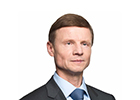
Aivar Sõerd
Profiling Eesti Reformierakonna fraktsioonAI Summary
Aivar Sõerd is raising concerns regarding the achievement of the Estonian 2035 strategy's nominal labor productivity target (set at 110% of the EU average). He notes with concern that as of 2023, the figure stood at only 77.5%, and he wishes to know whether the negative trend of falling further behind the target has persisted or if the trajectory has reversed.
Majandus- ja tööstusminister Erkki Keldo
AI Summary
Minister of Economic Affairs and Industry Erkki Keldo addressed the paradox of declining productivity alongside record employment, explaining that businesses are holding onto skilled workers in anticipation of the future, even if it means sacrificing short-term profitability. However, he emphasized that the long-term solution for boosting Estonian productivity and bringing it up to the European level is systematic investment in research and development (R&D) and reforming the education system, rather than relying on short-term quick fixes.
Esimees Lauri Hussar
AI Summary
Chairman Lauri Hussar gave the floor to Riina Sikkut.

Riina Sikkut
Profiling Sotsiaaldemokraatliku Erakonna fraktsioonAI Summary
Riina Sikkut emphasizes the necessity of a systemic and smart approach to economic development, criticizing the fact that it is not treated as a horizontal topic, unlike regional policy. She cites the case of the Tartu prison as an example, where decisions made by other ministries create low value-added jobs, effectively locking people into sectors that are inefficient from the perspective of a knowledge-based economy.
Esimees Lauri Hussar
AI Summary
Chairman Lauri Hussar used the short and concise phrase, "Your time!" to signal to the next speaker that their speaking time had begun.
Riina Sikkut
Profiling Sotsiaaldemokraatliku Erakonna fraktsioonAI Summary
Riina Sikkut called on all ministers to make economic development the central and significant goal of their work.
Majandus- ja tööstusminister Erkki Keldo
AI Summary
Minister of Economic Affairs and Industry Erkki Keldo praises the government's economic cabinet format, calling it a crucial platform for boosting economic competitiveness and cutting down on bureaucracy. He stresses that economic development requires input from every single ministry. Furthermore, he defends the creation of jobs within the prison service, viewing this as a chance to tackle one of Europe's highest youth unemployment rates. This initiative would provide training to 20,000 young people who are currently neither working nor studying, rather than simply reshuffling existing positions.
Esimees Lauri Hussar
AI Summary
After a brief introduction, Chairman Lauri Hussar gave the floor to Rene Kokk.
AI Summary
Rene Kokk expresses concern over the Ministry of Economic Affairs and Communications’ intention to prematurely terminate the mineral resources thematic plan initiated in Rapla and Pärnu counties. This plan was intended to provide local residents and entrepreneurs with long-term certainty regarding potential mining areas. He demands a detailed explanation from the minister as to how such a costly and transparency-reducing step supports the implementation of the state’s long-term development plan.
Majandus- ja tööstusminister Erkki Keldo
AI Summary
Minister of Economic Affairs and Industry Erkki Keldo stressed that although he had not prepared for the specific question and would send the exact details in writing, a nationwide planning initiative called "Estonia 2050" is currently underway. The objective of this initiative is to create a precise, long-term map that charts all activities—including residential areas, infrastructure corridors, mining operations, and production zones—in order to provide communities with a clearer understanding of future spatial planning and mitigate potential conflicts.
Esimees Lauri Hussar
AI Summary
Chairman Lauri Hussar gave the floor to Mart Võrklaev, inviting him to the podium.
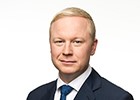
Mart Võrklaev
Profiling Eesti Reformierakonna fraktsioonAI Summary
Mart Võrklaev came to the defense of the minister who had been criticized for the economic recession, stressing that the downturn began during the tenure of the previous Isamaa minister, whose solutions proved ineffective. He then asked the minister to specify his priorities and strategy for stimulating the Estonian economy during the upcoming European Union funding period 2028–2034, ensuring that funds are utilized wisely given the constraints of the tight state budget.
Majandus- ja tööstusminister Erkki Keldo
AI Summary
Minister of Economic Affairs and Industry Erkki Keldo responds to a question concerning changes in European financing systems, highlighting the creation of the new European Competitiveness Fund. The coordination of this Fund will fall under the responsibility of the Ministry of Economic Affairs, and its focus will be on financing research and development, and developing the defense industry and strategic autonomy (e.g., energy). Additionally, in his capacity as Minister of Labor, he emphasizes the importance of further training, retraining, and the real-world application of artificial intelligence for elevating the economy to the next level.
Aseesimees Arvo Aller
AI Summary
Deputy Chairman Arvo Aller and Lauri Läänemets were called to the speaker's stand to begin their presentation.
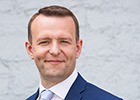
Lauri Läänemets
Profiling Sotsiaaldemokraatliku Erakonna fraktsioonAI Summary
Lauri Läänemets expresses confidence in the minister but is critical of the prime minister, considering him a failure, and points out that domestic consumption—which is essential for economic growth—is under threat, as the concentration of wealth in the hands of a few and the rising number of people living in absolute poverty indicate a weakening of the middle class.
Majandus- ja tööstusminister Erkki Keldo
AI Summary
Minister of Economic Affairs and Industry Erkki Keldo only managed to utter the incomplete term "suhtelises" (in relative), leaving the topic essentially unaddressed.
Lauri Läänemets
Profiling Sotsiaaldemokraatliku Erakonna fraktsioonAI Summary
Lauri Läänemets criticizes the logic behind the government's tax changes, emphasizing that while the upper middle class benefits from them, the lower segment, which constitutes the main domestic consumer base, will become poorer, and questions how such a reform is supposed to support domestic consumption.
Esimees Lauri Hussar
AI Summary
Chairman Lauri Hussar, acting as moderator, signaled with a brief phrase the start of the next speaker's allotted time.
Lauri Läänemets
Profiling Sotsiaaldemokraatliku Erakonna fraktsioonAI Summary
Lauri Läänemets emphasized that, from the perspective of a merchant's operations, it is paramount that the goods he offers are actually purchased.
Majandus- ja tööstusminister Erkki Keldo
AI Summary
Minister of Economic Affairs and Industry Erkki Keldo emphasizes that the long-term success and growth of prosperity in the Estonian economy critically depend on exports (which constitute over 75% of the economy) and the integration of research and development (R&D) into the education system. He argues this is because taxes are merely a tool for redistributing money and do not generate economic growth. He believes that the key issue for lifting people out of poverty and low-wage employment is better education, further training, and jobs with higher added value. Furthermore, he criticizes the current tax hump (gross income of €1,200–€2,100), which unfairly penalizes the lower segment of the middle class.
Esimees Lauri Hussar
AI Summary
Chairman Lauri Hussar. Vadim Belobrovtsev was called to the podium to deliver his presentation, but his actual address is missing from the submitted text.
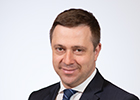
Vadim Belobrovtsev
Profiling Eesti Keskerakonna fraktsioonAI Summary
Vadim Belobrovtsev addressed the minister, offering thanks and immediately pointing out that the minister had presumably not yet had time to review a certain recent piece of news, which the speaker intended to highlight.
Majandus- ja tööstusminister Erkki Keldo
AI Summary
Minister of Economic Affairs and Industry Erkki Keldo gave a brief and direct answer, stating that he either failed to meet the deadline or was unable to achieve the set objective.
Vadim Belobrovtsev
Profiling Eesti Keskerakonna fraktsioonAI Summary
Vadim Belobrovtsev highlights the worrying situation in which more than a fifth of Estonia’s population lives in either relative or absolute poverty (the latter figure has risen). He then asks how the development strategy "Eesti 2035" is planned to be executed in a way that would noticeably lower the poverty rate, requesting a concrete vision to achieve this.
Majandus- ja tööstusminister Erkki Keldo
AI Summary
Minister of Economic Affairs and Industry Erkki Keldo refutes the claim that tax policy alone would solve the poverty problem, emphasizing instead that the real solutions lie in education and improving skills. This ranges from retraining programs offered by the Unemployment Insurance Fund (Töötukassa) and vocational education reform, to supporting research and development, all aimed at creating productive, high-added-value jobs that allow people to earn a competitive wage. He stressed that this is a long-term and fundamental undertaking.
Esimees Lauri Hussar
AI Summary
Chairman Lauri Hussar concluded the questioning of the minister and then proceeded to prepare the vote on the Reform Party faction's proposal, which involved extending the session until the agenda was exhausted, but no later than 2:00 PM.
Esimees Lauri Hussar
AI Summary
Chairman Lauri Hussar announces that, as 22 members of the Riigikogu supported the proposal, the sitting will be extended until 2:00 PM or until the agenda is exhausted. To continue the debate, Õnne Pillak, the representative of the Reform Party faction, is invited to the podium.
Õnne Pillak
Profiling Eesti Reformierakonna fraktsioonAI Summary
Õnne Pillak supports the government's measures to boost the economy, such as strengthening defense capabilities, reducing bureaucracy, and supporting major investments, emphasizing that the state's role is to create a business-friendly environment. Furthermore, in addition to abolishing the income tax 'hump,' she also advocates for canceling the planned 2% income tax hike. She justifies this by citing the economy's better-than-expected performance, which would allow for offering the middle class one of the largest tax reliefs in recent history and ensuring pension increases through robust economic growth.
Esimees Lauri Hussar
AI Summary
Following a brief word of thanks, Chairman Lauri Hussar handed the Riigikogu rostrum over to Rain Epler on behalf of the faction of the Estonian Conservative People's Party.
Rain Epler
Profiling Fraktsiooni mittekuuluvad Riigikogu liikmedAI Summary
Rain Epler criticizes both the ministers' departure from the debate and the government's energy policy, claiming that, contrary to the minister's narrative, increasing the share of wind and solar energy will not lead to a drop in electricity prices; rather, it will raise them. This is because intermittent energy requires expensive, fossil fuel-based double capacity and causes grid instability. He cites the deindustrialization of Germany and the high prices in the United Kingdom as proof that the massive development of renewable energy results in growing costs for consumers.
Esimees Lauri Hussar
AI Summary
Chairman Lauri Hussar politely requested a brief, one-minute extension to finish his thought.
Rain Epler
Profiling Fraktsiooni mittekuuluvad Riigikogu liikmedAI Summary
Rain Epler emphasizes that energy policy has become a strategic security issue, as renewable energy development projects threaten economic competitiveness and societal resilience, and lead to a direct negative impact on national defense by damaging the signal intelligence capability necessary for early warning. Consequently, ministers are urged to thoroughly familiarize themselves with energy matters.
Esimees Lauri Hussar
AI Summary
Chairman Lauri Hussar offered his thanks and then yielded the floor to his colleague Jaak Aab on behalf of the Social Democratic Party, stressing that Aab would be speaking under a specific mandate.
AI Summary
Jaak Aab addresses the stagnation of the Estonian economy, basing his views on the recommendations of the Competitiveness Expert Council. He emphasizes that the greatest obstacle to the economy's competitiveness is insufficient electricity generation capacity and import dependency. Consequently, it is vital to accelerate the development of renewable energy (solar and wind farms) to ensure the security of supply, lower prices, and keep pace with global trends.
Esimees Lauri Hussar
AI Summary
Chairman Lauri Hussar requested or announced the need for three additional minutes.
AI Summary
Jaak Aab analyzes Estonia's decline in productivity, the main reason for which is the lack of investment confidence, exacerbated by the public discussion surrounding the threat of war. He emphasizes that national defense investments provide entrepreneurs with the necessary perspective, criticizes tax policy (especially the impact of VAT on the domestic market), and sees the regional establishment of renewable energy production capacities as a significant boost for the development of local industry.
Esimees Lauri Hussar
AI Summary
Chairman Lauri Hussar handed the floor over to the next speaker with the short phrase, "Your time!" marking the start of the speaking round or presentation.
AI Summary
Jaak Aab announced that the government is currently working on plans for the development of regional industry, the drafts of which will be presented to the Riigikogu in the near future, and wished everyone strength for continued progress.
Esimees Lauri Hussar
AI Summary
Chairman Lauri Hussar gave the floor to the representative of the Centre Party faction, inviting Aleksandr Tšaplõgin to the Riigikogu podium.
Aleksandr Tšaplõgin
Profiling Fraktsiooni mittekuuluvad Riigikogu liikmedAI Summary
Aleksandr Tšaplõgin sharply criticizes the green energy policy of the government, particularly the Reform Party, deeming it unprofitable and destructive to the economy. He further alleges that the backing of this unviable project—which is subsidized by hundreds of millions of euros—stems from Prime Minister Kaja Kallas's prior active roles on the boards and councils of private green energy firms, thereby revealing the Reform Party's concrete financial interests tied to the green transition.
Esimees Lauri Hussar
AI Summary
Chairman Lauri Hussar thanked the participants, announced that there were no further requests to speak, and closed the debate, thereby concluding the consideration of today's first agenda item.